Today’s post is a fun one—an unexpected mix of Hollywood lore, cemetery history, and the quiet, behind‑the‑scenes world of funeral service. It’s the kind of story I love sharing: a reminder that even in the most familiar places, there are always hidden corners, surprising connections, and lives whose legacies continue to ripple outward in ways we don’t always expect.
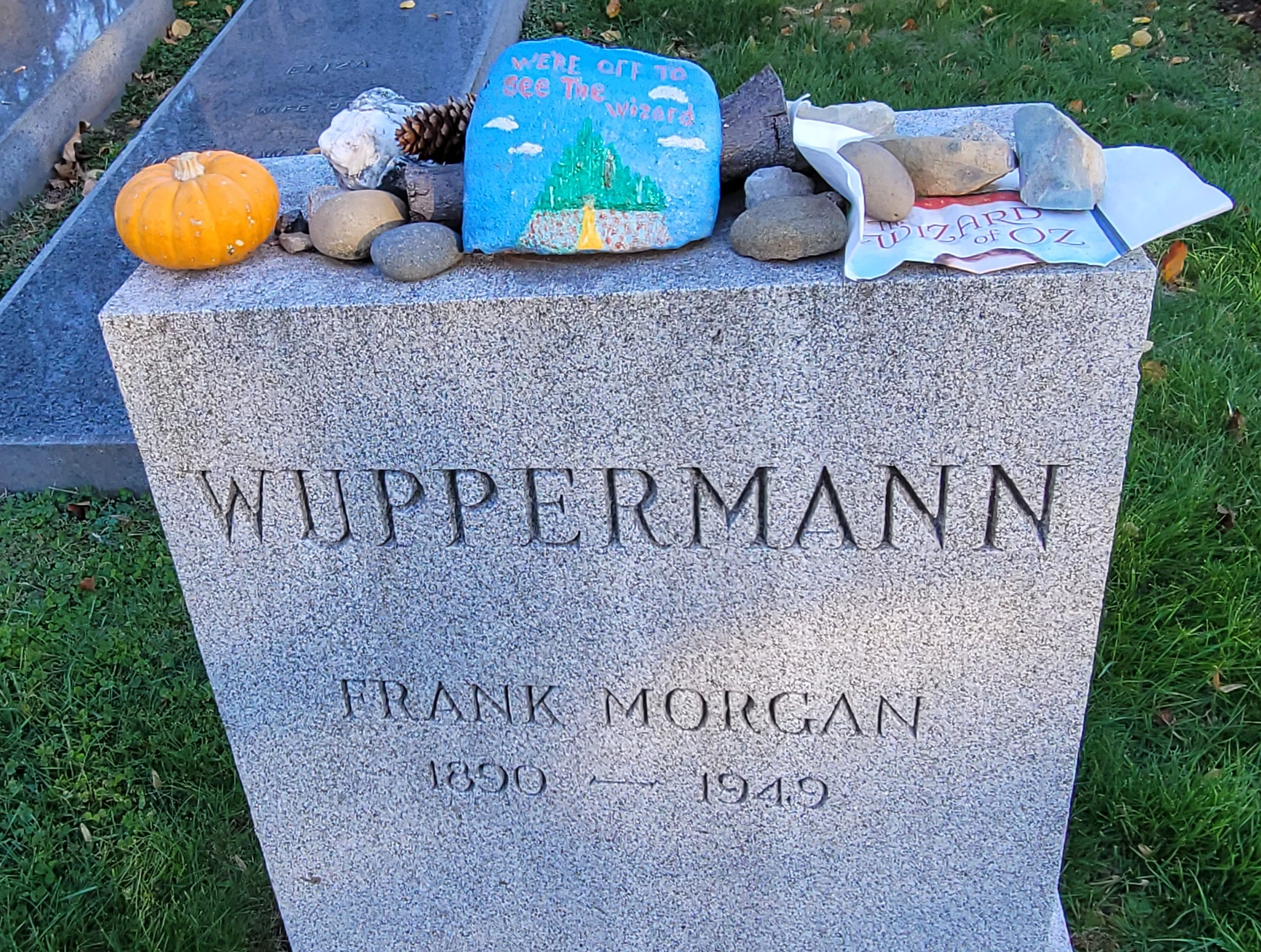
Green‑Wood Cemetery is home to many notable figures—Elias Howe, Henry Bergh, and countless others whose monuments announce their place in history. Yet one grave that often escapes the notice of casual visitors belongs to Frank Morgan, born Francis Phillip Wuppermann, the actor whose warm, wavering voice and gentle comic confusion helped shape The Wizard of Oz (1939). His grave, marked simply with the family name, rests on a small rise along Grape Avenue—an unassuming stone for the man who played the Wizard, Professor Marvel, the Gatekeeper, the Emerald City cabby, and the palace guard.

Born in New York City in 1890, one of eleven children in a prosperous family, Morgan began his career in silent films. He appeared in early productions such as Gentlemen Prefer Blondes before making his feature debut in 1916’s The Suspect. His career flourished in the studio era, earning him an Academy Award nomination for The Affairs of Cellini in 1934.
His most enduring legacy, of course, came with The Wizard of Oz. There’s an oft‑repeated tale that the shabby coat he wore as Professor Marvel was discovered in a Los Angeles secondhand shop and later found to have belonged to L. Frank Baum himself. It’s a story too perfect to be true—no evidence has ever confirmed it—but it persists because it feels like something Oz would allow: a bit of magic tucked into the mundane.
Morgan’s final work included Key to the City with Clark Gable and Loretta Young, and several scenes as Buffalo Bill in the musical Annie Get Your Gun. He died in his sleep at the age of 59. After a funeral Mass at All Saints Episcopal Church in Beverly Hills—where Clark Gable served as a pallbearer—his body was returned to Brooklyn and laid to rest in the Wuppermann family plot. Both his birth name and stage name appear on the stone.
Over the years, his grave has become a quiet pilgrimage site for Oz devotees. Visitors leave pebbles, tokens, and small tributes atop the marker. In spring, Green‑Wood’s grounds crew plants yellow crocuses along the slope, forming a gentle, living suggestion of the Yellow Brick Road leading straight to Morgan’s resting place.
One of Hollywood’s best‑loved performers, Morgan left behind an estate valued at more than a million dollars. His monument appears in my book on Green‑Wood Cemetery—a reminder that even the most unassuming stones can hold entire worlds of memory.