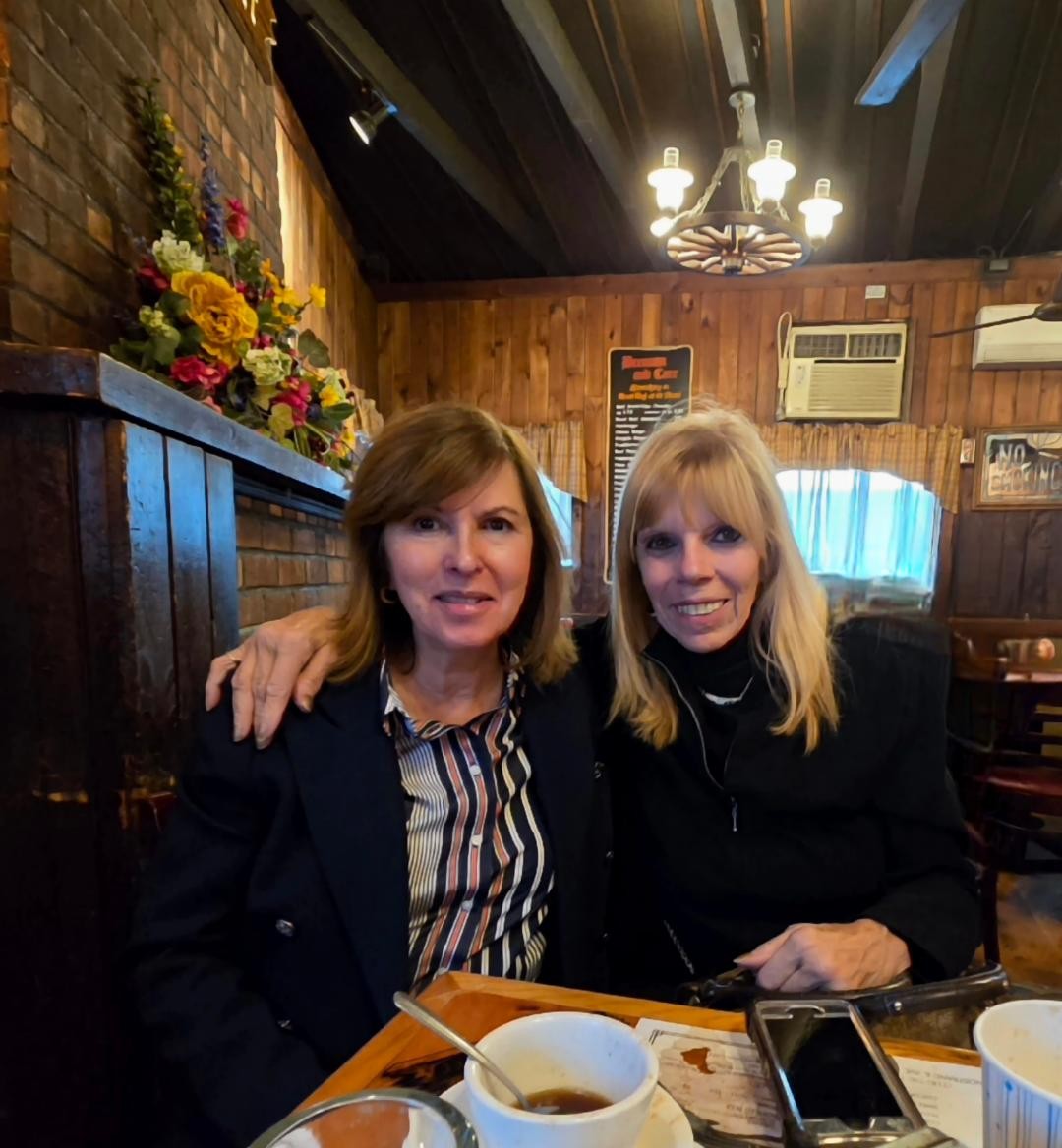
We didn’t set out to be trailblazers. We were just two young women who felt called to a field most people once only whispered about. Back then, the funeral industry still carried the not-so-quiet assumption that men handled the logistics, the decisions, the “serious” parts — and women, if they were present at all, were expected to hover at the edges, offering tissues and words of consolation.
But we weren’t built for the edges.
Women in funeral service were still treated like a novelty, an accessory to the “real” work. We learned quickly that you had to walk into a room like you belonged there long before anyone else believed it. You had to know your craft twice as well to be taken half as seriously. You had to lift caskets, navigate family dynamics, manage staff, and keep your voice steady even when someone tried to talk over you — and they often did.
So there we were: two young women in an industry that still assumed the men would handle the heavy lifting — literal and otherwise. The first time we met was in a cemetery office, both of us signing in our respective funerals. Doris was standing at the counter, tall and blonde, with an expression that said she’d already learned how to take up space in a place that wasn’t designed for her. I remember thinking, Oh. There you are..
We didn’t become friends right away — not in the instant‑bond, movie‑montage way. It was more of a recognition, the kind that happens quietly between women who’ve been navigating the same unspoken rules, the same raised eyebrows, the same subtle tests of competence. A shared understanding passed between us long before we ever exchanged more than a few words.
In those early years, the simple fact of finding each other felt like oxygen. Just knowing — You too? You’re doing this too? — was its own kind of comfort. It meant we weren’t imagining the weight. It meant we weren’t alone in carrying it. It meant that somewhere in the middle of all the proving and pushing, there was at least one other woman who understood exactly what it cost to stand your ground in a place that wasn’t built for you.
It took time for our friendship to develop — real time, the slow, steady kind that grows through shared glances in cemetery offices, brief conversations between services, and the unspoken solidarity of two women learning how to hold their own in a field that wasn’t ready for them. But once it rooted, it held.
Years later, when I wrote my first book — a memoir of my life as a woman in funeral service — my very first book talk was held at Green‑Wood Cemetery. And there she was, Doris, standing in the audience. It felt fitting, almost poetic, that the place where we’d spent much of our early professional lives became the place where she showed up to witness this new chapter of mine.
Over the years, our careers grew in parallel lines: two funeral homes, two distinct visions, two women who refused to run their businesses the way we were told we “should.” We built places where families exhaled the moment they walked in. Places where grief wasn’t rushed. Places where ritual still mattered.
And through it all — the late night calls, the impossible cases, the families who broke our hearts and the ones who stitched us back together — we remained each other’s constant. The person who understood without explanation. The one who could make you laugh in the middle of a week that had wrung you dry. The one who reminded you why you chose this work in the first place.
Ours is the story of two women, two funeral homes, and the friendship that carried us through a lifetime of caring for other people’s families — while learning how to care for ourselves.
Entering a Field That Wasn’t Built for Us
When we started, women in funeral service were still treated like a novelty — an accessory to the “real” work. We learned quickly that you had to walk into a room like you belonged there long before anyone else believed it. You had to know your craft twice as well to be taken half as seriously. You had to lift caskets, navigate family dynamics, manage staff, and keep your voice steady even when someone tried to talk over you — and they often did.
Building Two Businesses, Two Ways
Our funeral homes grew out of who we were — not who the industry expected us to be.
Doris’s became a place of warmth and fierce loyalty, a Brooklyn institution where families felt seen the moment they stepped through the door. The décor is homey in the way real homes are — not staged, not curated, but lived‑in and loved. Her office walls are lined with personal photos, including some of us through the years at Green‑Wood, our favorite times together. Albums filled with handwritten thank‑you notes sit within reach, the kind families send when they want to say you helped us through something we didn’t know how to face.
It’s the kind of place where people settle into the couch and exhale. Where they feel like they’re being welcomed, not processed. Where loyalty isn’t a marketing word — it’s a relationship built over decades.
Mine, on the other hand, became a space shaped by ritual, detail, and a belief that beauty and dignity are not luxuries but necessities in grief. I’ve always felt that the environment surrounding a family in mourning should hold them gently, give them something to rest their eyes on, something that reminds them that even in sorrow, there is order, meaning, and care.
I keep a scrapbook in my office filled with some of my favorite articles — pieces I’ve written, profiles of cemeteries I love, and histories of the places where families choose to lay their loved ones to rest. You’d be surprised how many people want to know the story of the ground they’re entrusting with someone they love. The architecture, the symbolism, the legacy — it matters. It comforts. It gives context to the moment they’re living through.
Families flip through those pages and find themselves lingering. They ask questions. They want to know more. And in that curiosity, something shifts: grief becomes not just an ending, but a continuation of a story.
Two funeral homes, two philosophies, two women who built spaces that reflect the way we see the world. Not identical. Not interchangeable. But deeply aligned in purpose.
We don’t compete. We don’t compare.
People often assume funeral homes are interchangeable, but anyone who has ever planned a service knows the truth: the energy of a place matters. The philosophy matters. The way you speak to a grieving daughter matters. The way you hold a mother’s hand matters. The way you honor a life matters.
We each created spaces that reflected our own sense of care. And somehow, without ever planning it, our two businesses became bookends of the same story.
The Friendship That Holds Us Together
There’s a kind of shorthand that develops between women who have done the same difficult work – who have witnessed the things we have. We can read each other’s exhaustion from a single text. We can tell when the week has been heavy just by the way one of us answers the phone. And we can make each other laugh in the middle of a day that had no business being funny.
We’ve stood beside each other through burnout, reinvention, heartbreak, and triumph. We’ve shared the cases that still live in our bones. We’ve celebrated the families who reminded us why this work is holy. We’ve held space for each other in ways that only someone who has lived this life can.
Our friendship isn’t a luxury. It’s a lifeline.
What People Don’t Know About Funeral Service
Most people only encounter funeral service during crisis. They see the surface — the flowers, the casket, the quiet voices. They don’t see the layers beneath.
They don’t see the emotional intelligence required to guide a family through the worst day of their lives. They don’t see the precision — the logistics, the timing, the choreography of ritual. They don’t see the beauty — the love stories, the legacies, the small moments of grace. They don’t see how the work changes you — softens you in some places, steels you in others.
And they rarely see the women behind it all.
Women who listen deeply. Women who lead with steadiness and heart. Women who have quietly reshaped the industry simply by showing up as themselves.
Funeral service has changed because women like us insisted on being here.
What Decades in This Work Have Taught Us
After all these years, here’s what we know:
That families remember how you made them feel long after they forget what you said. That ritual matters — not because it’s old, but because it’s grounding. That women’s leadership is not a trend; it’s a transformation. That friendship — real, enduring, soul-level friendship — is one of the few things that can hold you steady in a field that asks so much of you.
And that the work, for all its weight, is a privilege.
We’ve spent our lives caring for other people’s families. But the truth is, we’ve also spent our lives caring for each other. Two women, two funeral homes, one unbreakable sisterhood — built not just on shared work, but on shared purpose.
If there’s anything our story offers, it’s this: You don’t have to walk your calling alone. Find the person who understands the weight you carry. Find the one who reminds you who you are. Build your life — and your work — from there.
Things look very different now. The landscape we walked into — where women were rare, questioned, or treated like temporary guests in the profession — has transformed completely. Today, women are not only accepted in funeral service; they’re everywhere. There’s barely a funeral home left that doesn’t have at least one female funeral director on staff, and many are now entirely women‑run.
Jobs are plentiful for women in a way they never were when we started. Families request us. Colleagues respect us. The industry has learned — sometimes slowly, sometimes begrudgingly — that women bring a steadiness, a depth of listening, and a level of emotional intelligence that elevates the work.
What once felt like pushing against a closed door has become a field where women walk in freely, confidently, and without apology. And watching that shift happen — knowing we were part of the generation that helped pry that door open — is one of the quiet honors of our careers.