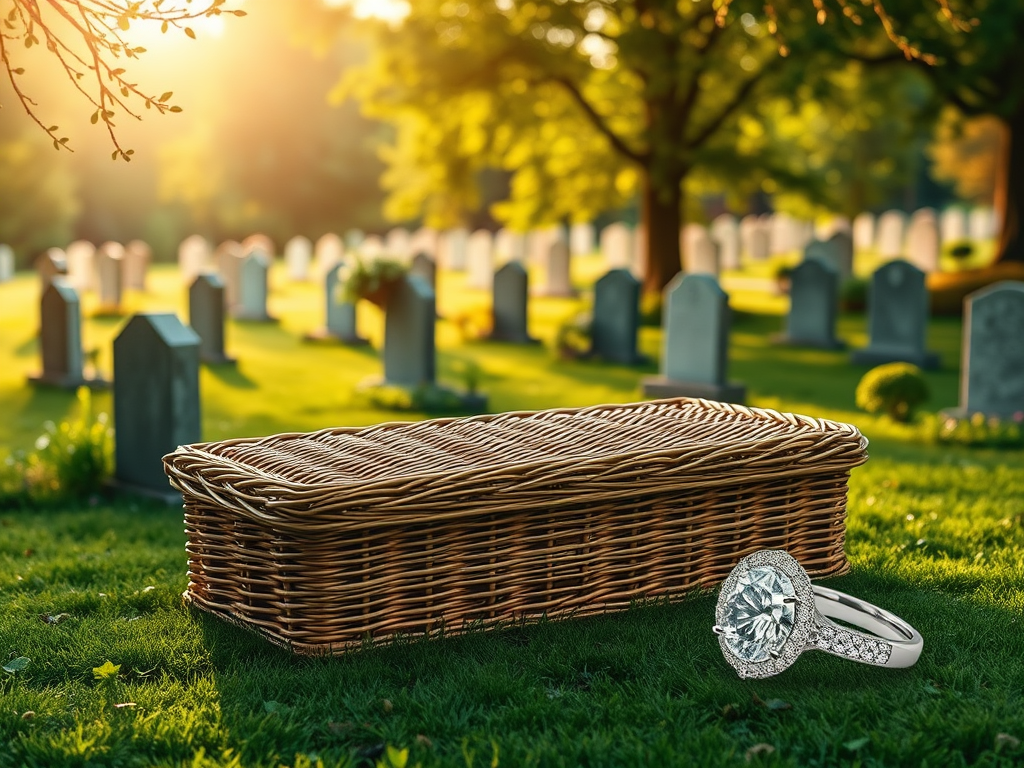
These days, traditional media and social media are filled with accounts of funeral trends, one more outlandish than the next. You can turn your loved one’s cremated remains into a diamond ring or a painting, shoot them into space, or incorporate a portion of the cremains into ink for a tattoo. Instead of a burial, alkaline hydrolysis (water cremation) and the composting of human remains have become suggested alternatives.
For anyone who has ever witnessed the majesty of a state funeral, can one actually conceive of a former president being composted? To our knowledge, no former president has ever been cremated.
However, the biggest myth is the supposed forward thinking and popularity of “Green Burial.” Such burials are nothing new. They have been the standard practice for those of the Jewish or Muslim faith since immemorial. The only thing new is the attempt to repackage the practice with the buzzword “eco-friendly,” creating a marketing opportunity. It’s important to note that the ‘green burial’ trend, while not a new concept, has gained attention in recent years due to increased environmental awareness. Still, none of this is the reality of funeral service and post-COVID, the trendy rhetoric has tamped down..
The disdain for these alternatives can also be cultural. A Jamaican family –with a proud history of tradition–one of us was serving got a look at a wicker “casket” and asked me what it was used for after briefly explaining the premise of green burial. The woman screwed up her nose to express her distaste. “I’d put my laundry in that, but never my mother,” she said. This cultural difference in funeral practices should be respected and understood, rather than dismissed.
Cemeteries, too, have quickly embraced the trends and trendy talking points. The website of Sleepy Hollow Cemetery, a historic cemetery in Tarrytown, New York, contains the phrase, “The Riverview Natural Burial Grounds is the perfect choice for those who seek an environmentally responsible option for the burial of a loved one or themselves.” So, is the implicit message that those who choose traditional burial are not “environmentally responsible”? This is an ironic stance from a cemetery that makes the bulk of its revenue from tourism and appears to serve as a perpetual Halloween party. Such a revenue stream would not be possible if the grounds were populated by so-called green burials with no headstones identifying the deceased. Moreover, what’s not being said about green burial is its hefty price tag. Generally, the cost of a “green” grave is comparable (or more than) to that of a grave in a headstone section. Natural does not equate with inexpensive. Think organic vs non-organic fruits and vegetables.
Yet, today, the mindset among some is to ignore the reality and sadness of death and the void it has created in our lives. The body, once regarded as sacred, has become an inconvenience that is brushed aside. We hear people flippantly say things like, “Throw me in the garbage when I die,” or “Who cares what happens to my body.” It is easy to say in a moment of casual discussion, but the reality is very different for loved ones whose lives will be altered forever by the loss. These flippant comments reflect a deeper discomfort with the subject of death, showcasing a societal tendency to shy away from conversations about mortality and the accompanying grief. It is important to understand that beyond these offhand remarks lies a profound emotional impact. But of more immediate concern, it is the loved ones who are ultimately left to deal with the messy reality of marking the end of life and doing something about the body, grappling with decisions that can be overwhelming in their complexity. They must navigate the logistics of funerals, burials, or cremations while processing their grief, further complicating the emotional landscape during such a vulnerable time. This dissonance between perceived indifference and the intense, often painful reality of loss raises critical questions about how we approach and discuss death within our society.
Many are not prepared for that responsibility. Already, our terminology has changed to take the focus off the death and make it a celebratory event: funerals are sometimes called celebrations of life. And while they can be that, too, some funeral directors bristle at that term, feeling it trivializes the significant and deeply emotional experience of saying goodbye to a loved one. “It’s a funeral. Not a party,” Doris says each time she hears the phrase, emphasizing the gravity and solemnity that accompanies such events. Then there is the “death positive” (what’s optimistic about death!?) movement, which claims to want to normalize conversations about death and dying and to encourage people to think about and plan for their deaths in a more open manner. They do this by selling T-shirts that read “future corpse” and showcasing cartoonish YouTube videos, all aimed at making death seem less frightening. “Death cafes,” populated by the young and morbidly curious, have also popped up, where people gather to discuss their thoughts and fears surrounding mortality over coffee and pastries. However, the sad truth is that those who need to make death funny to make it palatable are the true death deniers. Moreover, they are sending the message that grieving and mourning, in the traditional way, is passe, as if the emotional weight of loss can simply be brushed aside with humor and lightheartedness, rather than being acknowledged and processed in a meaningful, respectful manner.
test
 The Morte Girls