Colleagues of ours, with years of experience in the funeral industry, were recently approached for their first green burial request. When they received the inquiry, the first question posed was somewhat surprising – Can you handle such a request? The assumption here was that a green burial might be outside the realm of traditional funeral practices. The same question is sometimes posed about cremation, with some people believing that cremation-or any final disposition other than earth burial-is somehow apart from the norm. In fact, they sometimes call a crematory directly, only to be told they need to arrange a cremation through the funeral home of their choice.
It’s understandable why people might be confused. Despite the often silly “transparency” on social media by newly minted funeral directors vowing to “pull the curtain back,” legitimate funeral information is often hard to come by, especially when some in the funeral service have positioned themselves as so-called green burial “experts”- a laughable concept.
While green burials seem novel to many, they’ve been part of the burial landscape for quite some time. Green burial is as old as time and has long been the practice of those of the Jewish and Muslim faiths. But today, with clever marketing highlighting the eco-friendliness of it, and the press hyping all things “green,” the public may believe that this is a popular disposition. Another misconception — perhaps the biggest –is that a green burial is economical. It is not, as my colleagues found out.
As my colleagues researched cemeteries for the family in question, they were stunned by the high prices of the graves. The cost of a grave in a green cemetery section approximates the cost of one in a more traditional section. But, more often, the cost is substantially more. Moreover, in New York State, the only stand-alone green cemeteries are upstate, so be prepared for a hearse (or other vehicle transport) with a cost of up to $1,000.

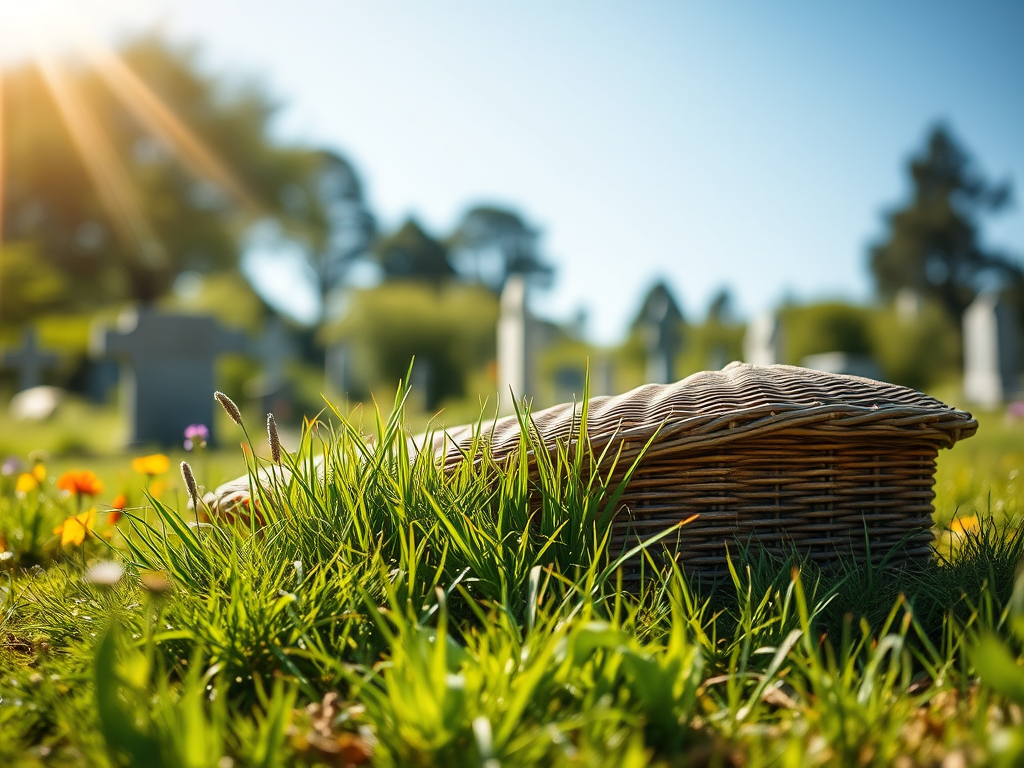
Caskets, too, can be substantially more. In some places, the wicker casket is selling for $2,500. Wood, another alternative, is also pricey. When one flippantly says, “Just bury me in a pine box,” they are unaware of the high cost of natural wood. Another expense is the natural stone to be placed at the grave. And let’s not forget, if one is hewing entirely to what is natural, one may need to purchase a biodegradable burial shroud, rather than using one’s own clothing.
We know of one funeral director who claims to specialize in green burials. To be clear, funeral directors do not specialize in any type of funeral or final disposition. We handle them all. Moreover, this same person prattles on about keeping funeral costs low, but has some of the highest prices in the New York City area.
Then there’s The Green Burial Council. An association that offers to certify funeral directors at a cost of $445 for the privilege of being listed on their website as Green Burial providers. ALL funeral directors are green burial providers. Though a director in one upstate funeral home, in close proximity to one of the natural burial grounds, told me they felt pressured to pay the fee so that a family would mistakenly believe they could not provide such a service. Perception is everything.
Green burials continue to be a niche market for end-of-life planning. Families must be wary of the costs associated with funerals, and a green burial often comes with its own unique price tag. Eco-friendly options like wicker caskets or biodegradable shrouds are akin to luxury items. These products often represent a rebranding effort rather than genuine ecological concerns. Marketing plays a significant role in how services are presented and perceived in today’s society.
Our colleagues have embraced this request and stand ready to offer support and guidance, ensuring that each family’s wishes are respected. Just make no mistake about what it is and what it costs. And that all funeral homes provide such a service
 The Morte Girls